Scoperis Scoperis Lead Generation That Looks Ahead

Fourteen pieces of work, in the order they happen.

A first project in a new market usually starts at the top. An established program may only need the later stages.

Stage 1

Understanding the market

Market mapping

A structured picture of the market you sell into: how it divides, who operates in each part, and where your buyers sit.

What this covers

  • How the market divides into segments
  • Who operates in each
  • Which parts deserve attention

What you receive

  • A written map, segments defined in plain language
  • The companies found in each segment
  • Where the best fit sits, and why

Where this stopsWe map the market as it is. We do not forecast market size.

Industry research

Background on a sector you are entering: how it is structured, who holds budget, and the vocabulary it uses for the problem you solve.

What this covers

  • How companies in the sector are structured
  • Who holds budget and who signs off
  • The vocabulary the sector uses

What you receive

  • A written briefing on the sector
  • How buying decisions are usually made
  • The terms and job titles actually used

Where this stopsBackground for your approach, not a marketing strategy or a sales script.

Market segmentation

Dividing a broad market into groups that behave differently, so each can be approached on its own terms.

What this covers

  • Grouping by size, structure, behavior, or maturity
  • What separates one group from the next
  • Ranking groups by fit

What you receive

  • Defined segments with the criteria behind each
  • Every account tagged with its segment
  • How each segment differs in practice

Where this stopsWe define the segments. Which to pursue is your call.

Stage 2

Finding the right companies

Prospect research

Turning your description of a good customer into researchable criteria, then finding the companies that genuinely meet them.

What this covers

  • Your description of a good customer, made researchable
  • Companies that meet the criteria
  • Each reviewed against the brief

What you receive

  • A list of companies that meet your criteria
  • A short reason for each
  • Companies ruled out, where useful

Where this stopsWe research companies. We do not contact them.

Account identification

Confirming each company on your list is trading, independent, and not a duplicate or a subsidiary already listed.

What this covers

  • Whether the company is trading
  • Holding companies, subsidiaries, and duplicates
  • Companies merged, closed, or acquired

What you receive

  • A de-duplicated account list
  • Group structure noted where relevant
  • Anything removed, with the reason

Where this stopsWe confirm a company exists and is active. We do not assess its finances.

Opportunity screening

A last check before an account reaches you: outside your scope, on your exclusion list, or an arguable fit.

What this covers

  • Accounts outside your stated scope
  • Competitors, customers, and your exclusion list
  • Accounts where the fit is arguable

What you receive

  • A screened list with exclusions applied
  • Borderline accounts flagged, not dropped
  • A record of what was excluded and why

Where this stopsWe screen against the criteria you give us, not information you have not shared.

Stage 3

Finding and checking people

Contact discovery

Identifying the people inside each account who hold the responsibility that matters for what you sell.

What this covers

  • Which roles are relevant to your offer
  • The people currently holding them
  • Shared decisions, with more than one contact

What you receive

  • Named contacts with current job title
  • Their position in the decision structure
  • More than one contact where the decision is shared

Where this stopsWe find who holds the responsibility. We cannot confirm budget authority from outside a company.

Contact verification

Confirming the person is still in the role, the address accepts mail, and any direct number works, before delivery.

What this covers

  • The person is still in the role
  • The address accepts mail
  • Direct numbers, where available

What you receive

  • Contact details with a status against each
  • A clear label where an address could not be confirmed
  • The date each record was last checked

Where this stopsWe confirm an address is deliverable. No one can guarantee a reply.

Data qualification

Applying your definition of a usable lead to every record, so what arrives is already filtered to your standard.

What this covers

  • Your rules turned into checks
  • Every record checked against them
  • Grading where you want it

What you receive

  • Records that meet your stated criteria
  • Grading applied where asked
  • What was removed, and on which rule

Where this stopsWe qualify against criteria you define. We do not assess intent to buy.

Stage 4

Delivering and maintaining

Lead generation

The finished output: researched accounts and confirmed contacts assembled into one structured, reviewed set.

What this covers

  • Accounts and contacts assembled into one set
  • Every field to a consistent standard
  • A final review before release

What you receive

  • A structured file in a format your systems accept
  • No manual cleanup
  • A summary of what was researched and found

Where this stopsWe deliver researched leads. We do not run outreach or book meetings.

Lead licensing

Written terms setting out how a delivered set may be used, agreed before delivery so both sides know where they stand.

What this covers

  • Terms covering each delivered set
  • What the data may be used for
  • Which batch a record belongs to

What you receive

  • Usage terms with every delivery
  • A batch reference on every record
  • Terms agreed before delivery, not after

Where this stopsThe terms cover our delivery to you. Your obligations under the laws that apply remain yours.

Source attribution

A record of where each piece of information came from, kept with the data, so any record can be traced back and checked.

What this covers

  • The origin of each detail, recorded
  • Kept with the delivered data
  • Available whenever you ask

What you receive

  • A source note on every record
  • Enough detail to retrace how it was built
  • A straight answer whenever you ask

Where this stopsWe do not use sources we are unwilling to name.

Lead reporting

A written summary with each delivery: what was researched, what was found, and what could not be confirmed.

What this covers

  • What was searched, against which criteria
  • How many accounts and contacts were found
  • What was excluded, and what could not be confirmed

What you receive

  • A written summary with every delivery
  • Gaps reported rather than passed over
  • Where the research met its limits

Where this stopsWe report on the research, not on your campaign results.

Database maintenance

Keeping a delivered set accurate over time: re-checking on a schedule, updating moves, removing what no longer holds.

What this covers

  • Re-checking on an agreed schedule
  • Contacts who changed role or employer
  • New accounts as they meet your criteria

What you receive

  • Refreshed records on the agreed schedule
  • What changed since the last delivery
  • Removals reported, not quietly dropped

Where this stopsWe maintain the data we delivered, not your wider CRM.

Choosing what you need

You will not need all fourteen.

Most engagements use a handful, depending on how well you already know the market.

A

New market

A sector you have not sold into. Start with mapping, industry research, and segmentation.

B

Known market, no list

You know the market but have no reliable list. Start at prospect research and run to delivery.

C

A list that is not working

Contacts are wrong or the companies a poor match. Start with data qualification and contact verification.

D

Ongoing program

Research is in place and needs to stay current: database maintenance and lead reporting.

Sectors

The same process, applied differently by sector.

How a market is structured changes what good research looks like. If your sector is not here, establishing how it works is the first stage.

The kind of company Scoperis clients actually sell into: contemporary mid-market commercial and industrial operations
Plate 07Where the clients' buyers actually work
01

Software and technology

Titles vary and roles change quickly. We work from responsibility rather than title, and re-check more often.

02

Manufacturing and industrial

Decisions are shared across operations, engineering, and procurement, so we identify more than one contact per account.

03

Professional services

The decision usually sits inside a practice group, not at the top. We research at practice level.

04

Logistics and supply chain

Depots and regional operations look like separate businesses. We resolve group structure first.

05

Healthcare and life sciences

Procurement often runs through formal channels. We research how buying works and flag where a direct approach is not the route in.

06

Financial services

Regulation shapes buying and how contact information may be used. We flag where compliance affects the approach.

07

Construction and property

Activity is project-driven, so timing matters as much as the company. We look at project stage.

08

Business services

Models vary widely, so segmentation matters most. We define segments before any list is built.

Size and structure

Sector is only half the picture.

A fifteen-person firm and a multi-state company need different research. Size and structure change who decides.

  1. 01

    Smaller companies

    One or two decision-makers, easy to identify and hard to reach.

  2. 02

    Mid-sized companies

    The most variable group. Structure differs greatly between companies of the same size.

  3. 03

    Large organizations

    Responsibility is distributed and procurement formal. Several contacts per account, and the right entity matters.

  4. 04

    Groups and subsidiaries

    The most common source of duplicates. Companies that look separate are often one organization.

Two different things

Buying a list is not the same as commissioning research.

Both end in a file of companies and contacts, so they get compared on price. The difference shows up afterwards.

A bought list

Built before anyone knew who you were

Assembled in advance for as many buyers as possible, then filtered toward your criteria. Everyone in your market can buy the same records.

Commissioned research

Built after we understood what you sell

Started from your brief. Each company is reviewed by a person and the reasoning recorded. Fewer records, and that is usually the point.

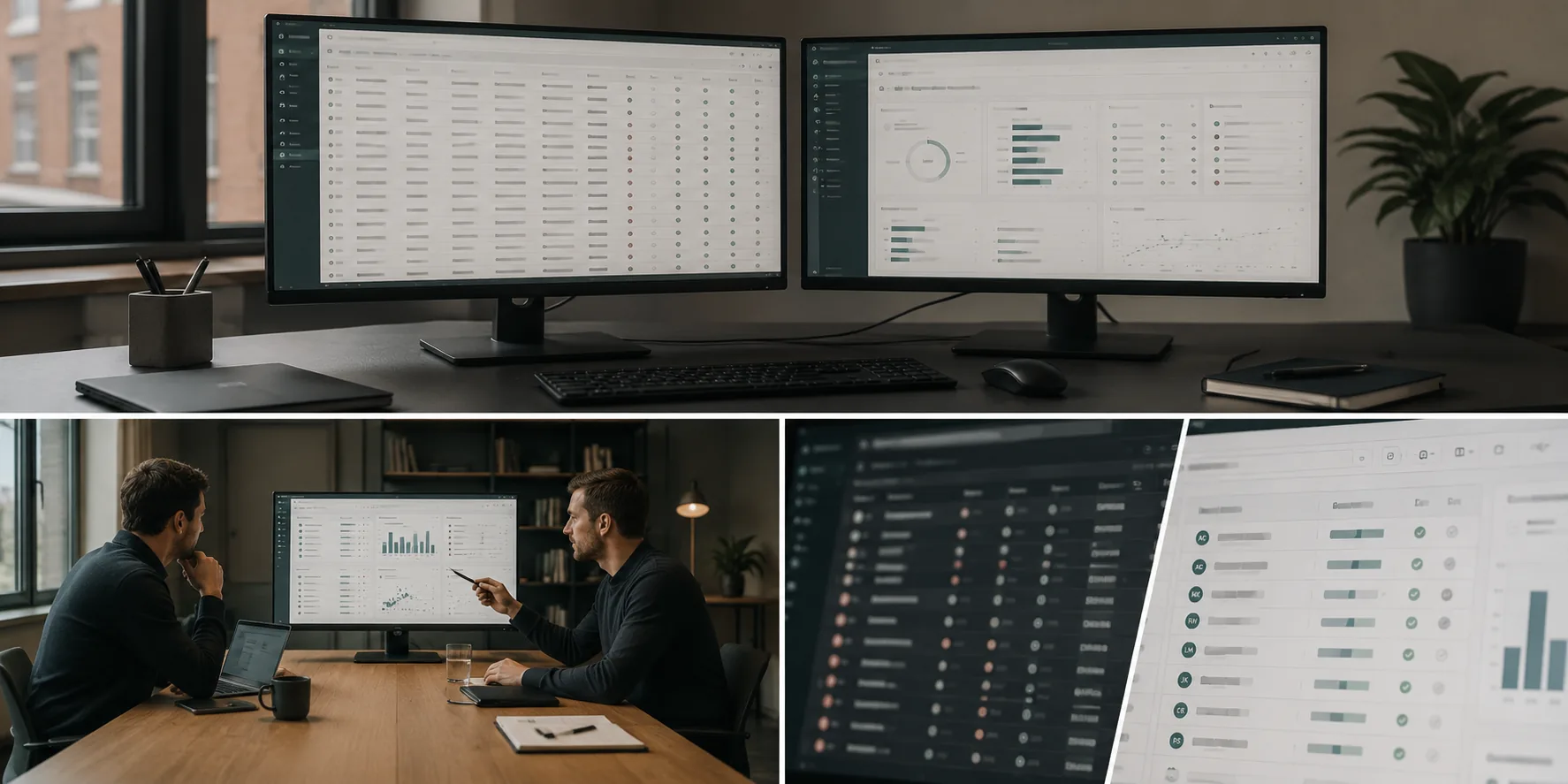
Bulk versus selection, shown on screen
Plate 08Bulk against selection

Bought lists are not always wrong. If you need broad reach at low cost and can absorb a poor hit rate, one may be sensible. If a wrong-fit conversation is expensive, the arithmetic changes.

Next step

Not sure which of these you need?

Describe your situation and we will say which stages apply.

Contact Us